Beyond the Halving Hype: A Data-Driven Look at What Bitcoin's Supply Shock Really Does to Your Altcoin Bag
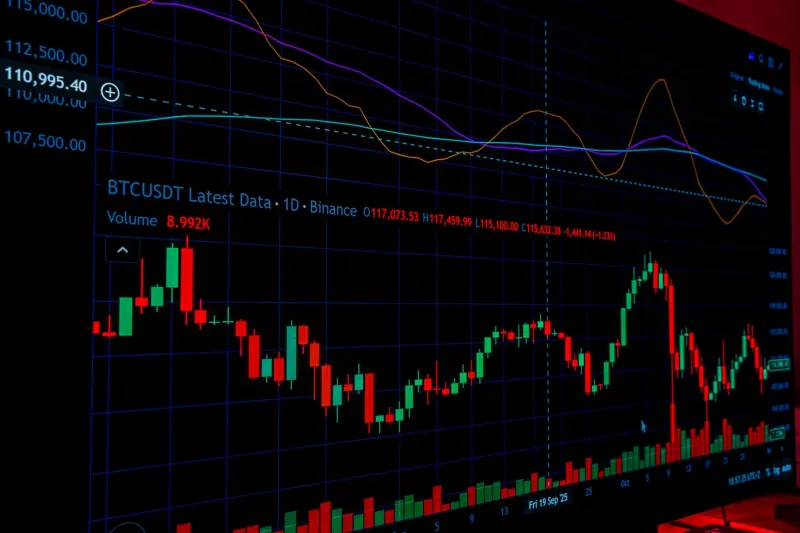
If you've spent any time in crypto circles, you've heard the halving narrative. Bitcoin's block reward drops by 50%, supply growth slows, demand stays the same or increases, price goes up. Simple enough. But what the mainstream conversation almost always misses is what happens downstream — to Ethereum, to Solana, to the long-tail altcoins sitting in your portfolio waiting for their moment.
The halving doesn't just affect Bitcoin. It triggers a cascading sequence of market events that reshapes the entire crypto landscape for 12 to 24 months afterward. Understanding that sequence — and where you are in it — is one of the more actionable edges available to retail traders who are willing to do the homework.
The Mechanics: Why the Halving Actually Matters
Bitcoin's supply issuance is coded to halve approximately every 210,000 blocks, roughly every four years. The April 2024 halving reduced the block reward from 6.25 BTC to 3.125 BTC. That means roughly 450 new BTC enter circulation per day instead of 900 — a significant reduction in selling pressure from miners who need to liquidate rewards to cover operating costs.
The stock-to-flow model, popularized by analyst PlanB, frames this as a supply shock that historically correlates with major bull cycles. The model has its critics — and valid ones — but the empirical track record across three prior halvings (2012, 2016, 2020) does show a consistent pattern: Bitcoin tends to reach new all-time highs within 12-18 months following each halving event.
2012 halving → BTC peaked roughly 12 months later at ~$1,150 (up from ~$12 pre-halving) 2016 halving → BTC peaked roughly 17 months later at ~$19,800 2020 halving → BTC peaked roughly 18 months later at ~$69,000
The pattern isn't perfect, and past performance is never a guarantee in crypto. But the consistency across three independent cycles is notable enough to take seriously.
Phase One: Bitcoin Dominance Spikes
Here's where most retail traders get caught flat-footed. In the months immediately following a halving, Bitcoin dominance — its percentage of total crypto market cap — typically increases. Capital flows into BTC as the narrative around supply scarcity gains momentum and institutional buyers accumulate.
During this phase, altcoins frequently underperform or even decline in USD terms, even as BTC climbs. Traders who load up on altcoins expecting an immediate broad market rally right after the halving often find themselves sitting on flat or negative positions while Bitcoin rips.
This was clearly visible in 2020. The halving occurred in May. BTC ran from roughly $8,500 to $29,000 by December. Meanwhile, many altcoins lagged significantly through the summer and early fall, only catching a bid in Q4 when Bitcoin dominance started declining.
Phase Two: The Altcoin Season Rotation
Once Bitcoin's dominance peaks and the market has absorbed the initial supply shock narrative, something reliable tends to happen: capital rotates outward into higher-risk, higher-reward assets. This is what the crypto community calls "altcoin season," and historically it has produced some of the most explosive price appreciation in the entire market cycle.
In the 2020-2021 cycle, this rotation was dramatic. Ethereum went from roughly $700 in December 2020 to over $4,800 by November 2021. Solana went from under $2 to over $250. Smaller cap tokens produced 10x, 50x, even 100x returns during this window.
The rotation logic makes sense: once Bitcoin has made large percentage gains, its upside for new capital feels more limited. Investors seeking outsized returns start looking at assets with smaller market caps where a comparable dollar inflow produces a larger percentage move.
Phase Three: The Correction and Shakeout
Every prior halving cycle has ended the same way — a sharp, painful correction that wipes out a significant portion of the gains. The 2022 bear market erased roughly 75% of Bitcoin's value from its peak and obliterated many altcoins by 90% or more.
For US retail traders, this phase is where the most wealth destruction happens. Investors who bought into the altcoin euphoria near the top, encouraged by media coverage and social media hype, find themselves holding assets that have collapsed in value with no clear recovery timeline.
The lesson from historical data isn't just "buy the halving" — it's know where you are in the cycle and have a plan for when the music stops.
Mining Profitability and Its Market Impact
There's another dimension that gets overlooked in casual halving discussions: miner behavior. When the block reward halves, less efficient mining operations become unprofitable and shut down, at least temporarily. This can create short-term selling pressure as miners liquidate reserves before the halving to secure runway.
Post-halving, surviving miners hold more tightly to their BTC, anticipating higher prices. This behavioral shift further reduces available supply on exchanges. For traders watching on-chain data, miner reserve levels and miner-to-exchange flows are useful signals during this period.
How to Position Your Portfolio Around the Halving Cycle
Based on historical patterns, here's a framework worth considering — though always calibrated to your own risk tolerance and financial situation.
Pre-halving (6-12 months before): Consider building BTC and ETH positions as institutional attention typically increases. Avoid chasing speculative altcoins during this phase.
Post-halving, Phase One (months 1-6): Watch Bitcoin dominance. If it's still climbing, patience with altcoin positions is warranted. Focus on quality — large-cap alts with real utility tend to rotate first.
Post-halving, Phase Two (months 6-18): This is historically the window for altcoin exposure. Sector rotation tends to follow a pattern: large caps first (ETH, SOL), then mid caps, then small caps. Earlier exposure carries more risk; later exposure means less upside but more confirmation.
Late cycle: Set price targets in advance and honor them. The hardest thing to do in a bull market is sell. Having predetermined exit levels removes the emotional component from that decision.
The Honest Caveat
Three data points — three prior halvings — is not a large sample size. The crypto market in 2024 and beyond operates with significantly more institutional participation, regulatory scrutiny, and global macro correlation than it did in 2012 or even 2016. The patterns may hold, they may compress, or they may break entirely.
What the halving cycle framework offers is a probabilistic lens, not a guarantee. It's a way of thinking about market positioning that has historical support — which is more than most crypto trading strategies can claim.
At 1XiBet Crypto, we're in the business of making calculated bets based on the best available information. The halving cycle is one of the most well-documented recurring events in crypto markets. Understanding it won't make you rich overnight, but ignoring it might mean you're always one step behind the traders who do.