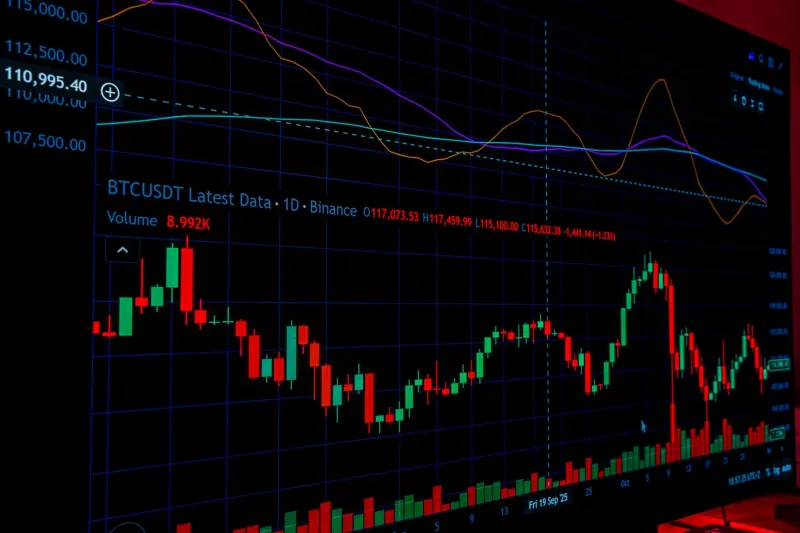
Margin Trading in Crypto: Why Borrowed Money Burns Faster Than Bear Markets
There's a certain kind of pain that only crypto margin traders know. It's not the slow burn of watching a coin bleed out over six months. It's the gut-punch of a liquidation notification at 3 a.m. — your position gone, your collateral wiped, your account sitting at zero before the morning coffee kicks in.
Leverage is one of the most misunderstood tools in the crypto space, and for US retail traders especially, it's become one of the fastest ways to transfer wealth from your wallet to an exchange's balance sheet. Let's break down exactly why that happens, what the hidden costs look like, and when — if ever — it actually makes sense to trade on margin.
The Seductive Math of Leverage
On paper, leverage looks incredible. A 10x position means a 5% price move in your favor nets you a 50% gain. For a trader sitting on $5,000, that's the difference between a modest win and a life-changing day. That's the pitch. That's what gets people in the door.
What the pitch glosses over is the flip side. That same 10x position gets liquidated with a 10% adverse move — and in crypto, 10% swings happen before lunch. During periods of high volatility, like the May 2021 crash or the FTX implosion in late 2022, Bitcoin dropped more than 15% in single trading sessions. Altcoins dropped 30%, 40%, sometimes more. At 10x leverage, those numbers aren't drawdowns. They're account-ending events.
A well-documented case from the 2021 bull cycle involved a trader who put $20,000 into a 20x leveraged ETH long on a major derivatives exchange. When ETH corrected from roughly $4,000 to $3,400 — a 15% dip that looked like noise on the weekly chart — the position was liquidated entirely. The trader lost the full $20,000 in under four hours. The coin recovered. The trader's capital did not.
Hidden Costs Nobody Talks About
Beyond liquidation risk, margin trading carries a stack of costs that quietly erode profitability even on winning trades.
Funding rates are the big one. On perpetual futures — the most popular leveraged product in crypto — longs pay shorts (or vice versa) every eight hours based on market conditions. During bullish periods, funding rates for longs can run 0.1% per eight-hour interval. That's 0.3% per day, roughly 9% per month, just to hold the position. A trader riding a 3x leveraged BTC long for 60 days could pay 18% in funding fees alone before accounting for any price movement.
Then there are liquidation penalties, spread costs on entry and exit, and the platform fees that stack up on high-frequency trades. For US traders using compliant platforms, there are also real tax implications — every leveraged position close is a taxable event, and the IRS doesn't care that you lost money on net if you had some winning trades mixed in.
The Psychological Trap: Why Traders Keep Over-Leveraging
Here's the part that behavioral finance researchers find fascinating: most traders know the risks. They've read the warnings. They've maybe even been liquidated before. And they do it again anyway.
The culprit is a combination of loss aversion and recency bias. After a big win on a leveraged trade, the brain recalibrates its risk tolerance upward. The last trade worked at 10x, so maybe 15x is fine. The market was volatile last week, but it feels calmer now, so the risk seems lower. Neither of these conclusions is rational, but they feel true in the moment.
There's also the revenge trade phenomenon. A trader gets liquidated, feels the emotional sting, and immediately re-enters with higher leverage trying to win back the loss quickly. This is arguably the single most common way small accounts turn into zero accounts.
Platforms know this. The user interface on most derivatives exchanges is designed to make increasing leverage feel trivial — a slider, a click, and you're at 25x. The friction is deliberately low because higher leverage means higher trading volume and higher fees for the exchange.
A Framework for Risk Management That Actually Holds Up
If you're going to use leverage — and some traders genuinely do use it responsibly — the framework has to be non-negotiable before you enter the trade.
Rule one: never risk more than 1-2% of your total portfolio on a single leveraged position. This isn't a suggestion. It's the difference between a bad trade and an account-ending event. If your stack is $10,000, a single margin position should risk no more than $100-200 of actual capital.
Rule two: set your stop-loss before you set your leverage. Most traders do it backwards — they pick a leverage amount, then think about stops. Start with where your stop is, calculate the dollar loss that represents, and then determine what position size keeps that loss within your 1-2% rule.
Rule three: respect funding rates as a real cost. If you're holding a leveraged position for more than a few days, run the numbers on what funding fees will cost you. Sometimes the math simply doesn't work.
So When Does Leverage Actually Make Sense?
Honestly? For most US retail traders, the answer is rarely. Leverage is a tool built for professionals with sophisticated risk systems, deep liquidity, and the emotional detachment to cut losing positions without hesitation.
That said, there are specific scenarios where modest leverage (2x-3x, not 20x) can be justified: short-term directional trades around high-conviction setups, hedging an existing spot position against a short-term downside risk, or capturing a brief arbitrage opportunity between markets.
The keyword in all of those cases is modest. The traders who survive long-term in this space treat leverage like a sharp tool — useful in specific situations, dangerous when handled carelessly, and never something you reach for out of impatience or greed.
At 1XiBet Crypto, we're all about making smart, calculated moves in this market. And the smartest move you can make with leverage is understanding exactly what it costs you before you ever open a position.